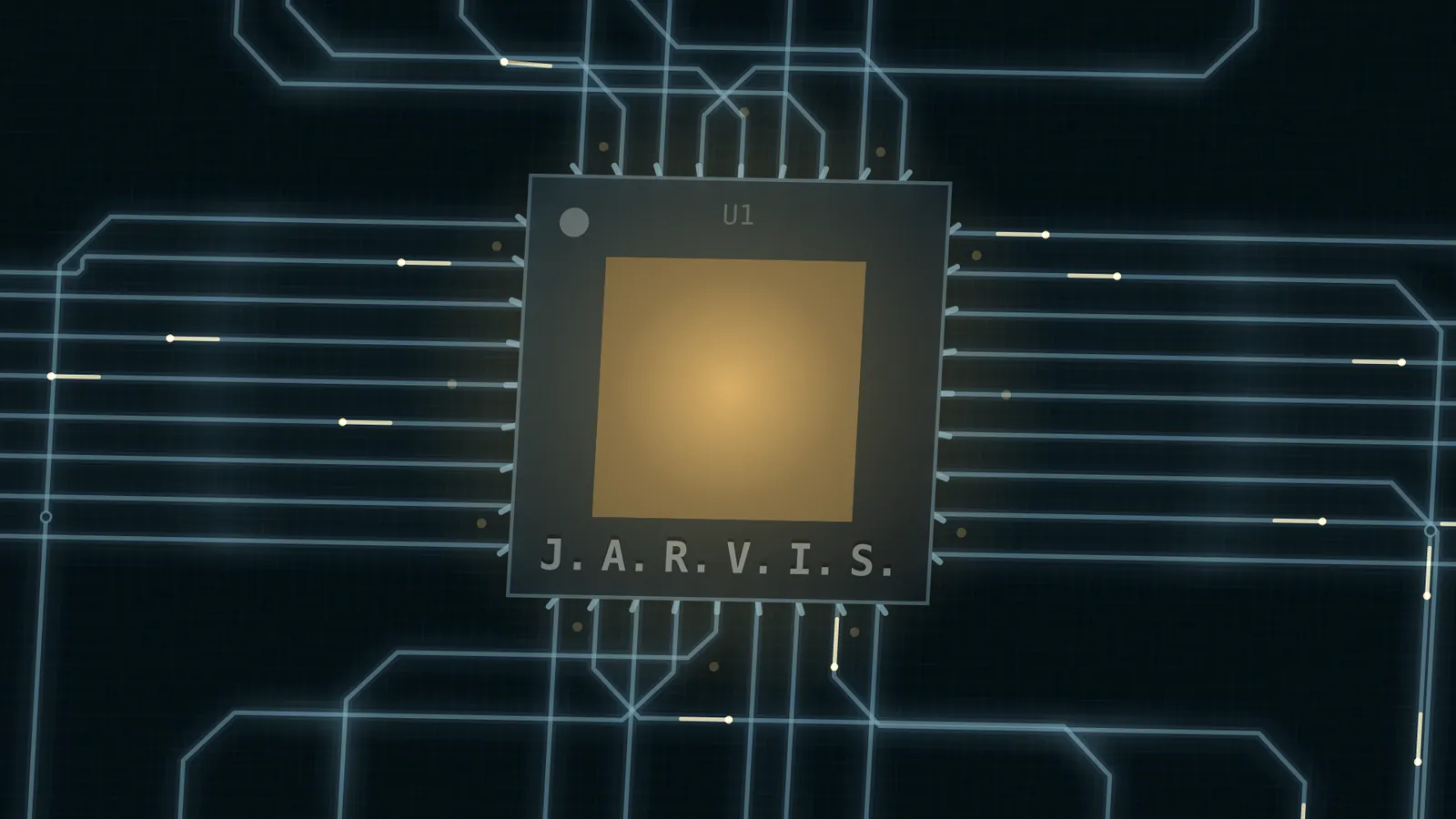
The brief was not “make something that reacts to audio”. It was a circuit board — a specific, physical thing, with rules about how it is put together that have nothing to do with looking good. That constraint is what made it work.
Copper routes like copper
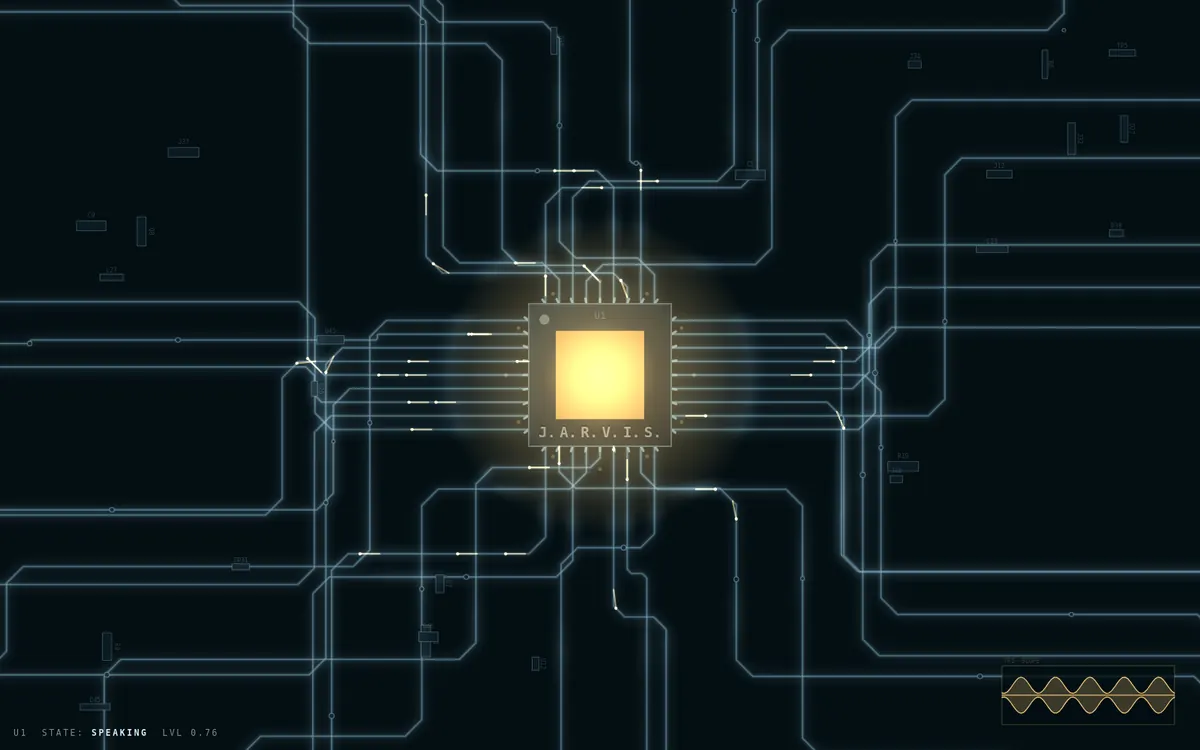
Real traces do not wander. They leave a pin at right angles, run in channels, and turn corners at forty-five degrees because a sharp corner is a manufacturing problem. Every corner in the build is mitred for that reason, and the routes escape the chip perpendicular before they head anywhere.
It would have been easier to draw lines radiating from the middle. That produces a starburst, which reads as wallpaper. The rule that made it read as a board was doing the boring thing that a real one does.
The pulses carry meaning
Light travels the traces, but not decoratively. Cyan is inbound, gold is outbound, red is an alert, and those never swap. When a pulse reaches a pin, that pin lights briefly — so arrival is visible, not implied.
Four states, and they differ in kind rather than in speed: at rest it is calm, listening reads as something arriving, thinking is busier and more of it internal, and speaking rides the live voice level with waves firing on the peaks of speech rather than on the level itself. That last detail is the difference between looking like talking and looking like pulsing.
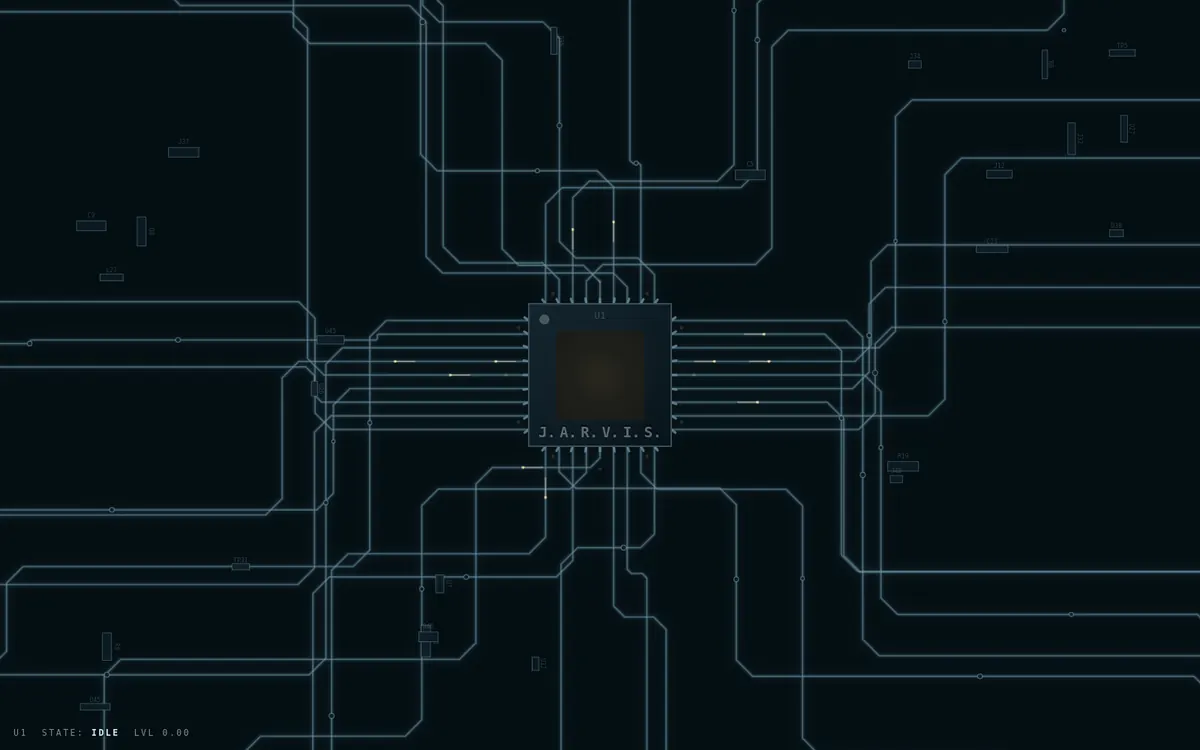
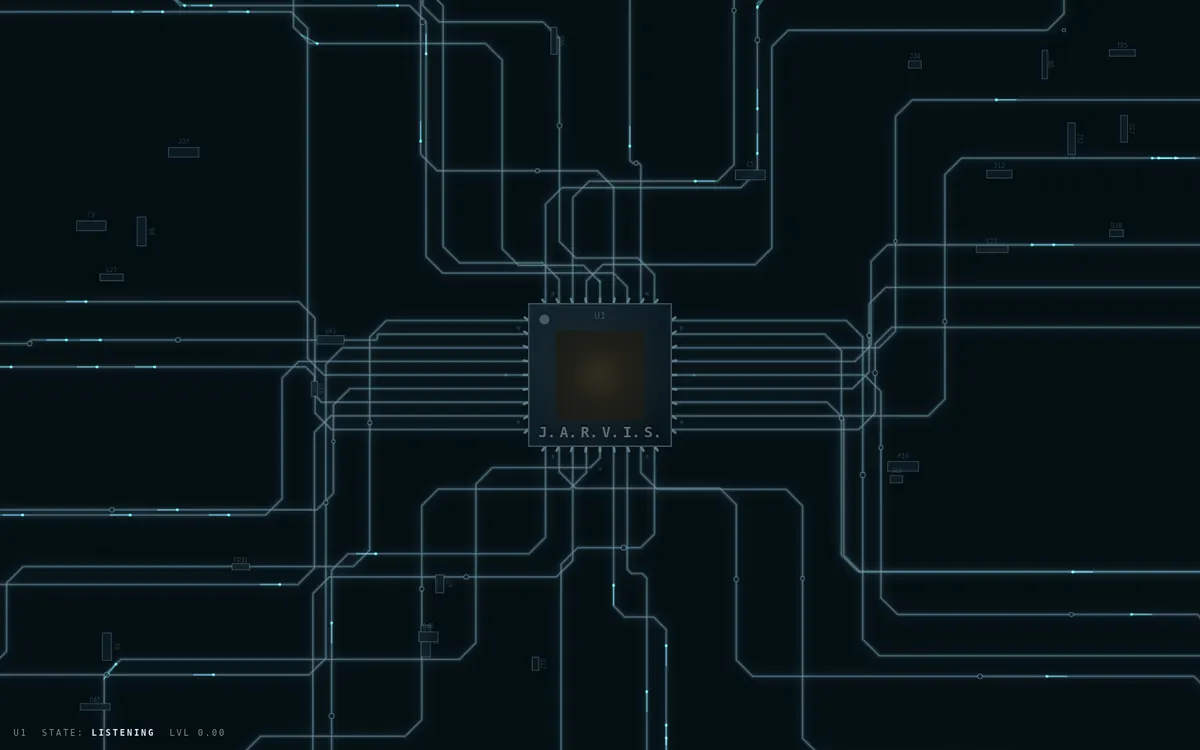
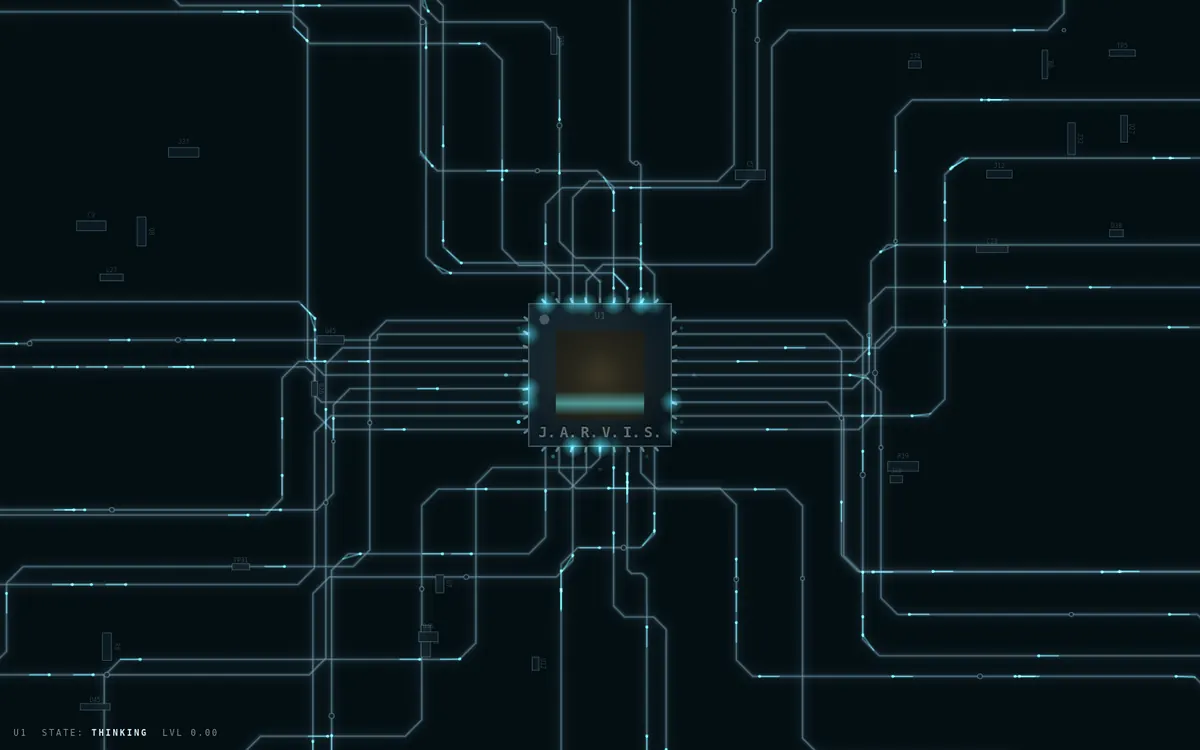
What it is made of
One hand-written HTML file. Canvas 2D, one render loop, no dependencies, no build step. The static half of the board — substrate, traces, silkscreen — is drawn once and cached; only the light moves every frame. That is what lets it run at full rate on an ordinary machine while still being one file you can read top to bottom.
The brief that produced it
About two hundred lines, and it is on the site rather than summarised. The button puts the whole thing on your clipboard; the link opens it if you would rather read it first.